Other Cool Blogs: Magical Words June 16, 2016

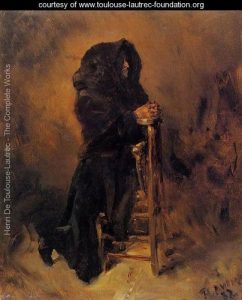
Woman-in-Prayer

Painting entitled: Woman in Prayer
Shared under the Creative Commons attribution

Worldbuilding: Gods

Everywhere we look religious is steeped into our culture. How the days of the weeks play out, the days off, holidays, how people dress, quotes, country boundaries, and dozen of other expectations. To write a world without religion, whether horror, science fiction, or fantasy creates an unreal world.

I loved how steeped Babylon 5 was in religion: Stephen Franklin’s Foundationism, Susan Ivanova’s Judaism, the Mimbari government being lead partially by their priesthood, and G’Kar’s fanaticism. Every character is on Bab 5 was driven partially by belief in something greater, including Londo’s ties to his people. Without the religious overtones, Babylon 5 would have been the typical bland sci-fi we normally see. Instead it constantly was asking questions.

Magical word’s Diana Pharaoh Francis covered the topic in “God-Fearing Woman”. The list of questions to ask when creating a religion are especially important. I lightly touched on religion in the flash Joelie and Sarah’s Last Day last month. Joelie is an ongoing character for me; I especially love the religion I created for him. The Tester is neither good or evil, benevolent or petty, but a smith shaping materials to be the best they can be – sometimes the hard hammer and sometimes the gentle hands.

WRITING EXERCISE: Pick three characters from your present work-in-progress. Create one prayer for each they might say at the beginning or end of a day.

READING EXERCISE: Think of your present read-in-progress. How does religion impact one of the characters? Does their beliefs drive any of their goals?

Book Review: Legion: Skin Deep (Legion #2)

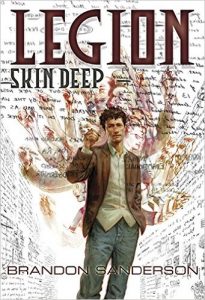
Book Cover for Legion: Skin Deep

Book Cover from Amazon

BOOK BLURB ON AMAZON

Legion: Skin Deep by Brandon Sanderson

From #1 New York Times bestselling author Brandon Sanderson, Stephen Leeds is back in a new, double-length novella that Library Journal says has “the pulse of a thriller and the hook of a fascinating hero balancing on the edge of psychosis.”

It’s not his own genius that Stephen Leeds gets hired for. Clients want to tap into the imaginary experts that populate his mind—and it’s getting a bit crowded in there.

Now Stephen and his internal team of “aspects” have been hired to track down a stolen corpse—but it’s not the corpse that’s important, it’s what the corpse knows. The biotechnology company he worked for believes he encoded top-secret information in his DNA before he died, and if it falls into the wrong hands, that will mean disaster.

Meanwhile, Stephen’s uneasy peace with his own hallucinations is beginning to fray at the edges, as he strives to understand how one of them could possibly have used Stephen’s hand to shoot a real gun during the previous case. And some of those hallucinations think they know better than Stephen just how many aspects his mind should make room for. How long will he be able to hold himself together?


MY REVIEW

As good as Legion (#1), this sequel continues to follow Stephen Leeds through another mystery. Not certain if this can be called a fantasy, sci-fi, or mystery genre – most likely mystery. Has the feel of a fantasy from the main character talking to ghosts – or is it sci-fi with additional programming in his brain. I guess last one felt more fantasy because of the religious pictures and this one is more sci-fi because of the cellular storage.

Anyway, who cares about compartmentalizing genres – that is just crazy talk. Like trying to compartmentalizing learning into 47 different personalities.

Great story, again the mystery unfolds in such a way you feel you got all the information you needed to solve the mystery before the reveal happens. No cheating on secret evidence the character finds but doesn’t share with the reader.

I would love more on this series, since I want a conclusion and a prequel and … well everything more. Unfortunately this is one of the stories Mr. Sanderson fits in between his contracted (and paid for) books. Here’s hoping he gets lots more plane rides where he can’t use his laptop with his official work in progress.

Flash: Memory of a Lifetime

Broken Egg With The Yolk And White Oozing Out

Image Courtesy of artur84 at FreeDigitalPhotos.net

Cheryl hummed happily as she unwrapped a cracker for April. Her baby immediately started working on it with her limited teeth, making a gummy mess.

The weekend had been wonderful, just her and her husband, with the added bonus of the children spending quality time with their uncle. Having breakfast out after picking the kids up was the perfect end to the perfect weekend, giving them time to be a family before jumping back into never-ending chores and work of a two-career household. These were the memories to last a lifetime.

The waitress finished taking Joe’s order and asked “Anything for the child?” she said nodding to Scott sitting neatly in his booster seat.

Cheryl smiled with parental pride at her oldest. “I think he is old enough to order his own breakfast.”

“Okay, little man, what would you like?”

“I want to devour the unborn.” Scott carefully enunciated and spaced words, his volume only slightly less than his normal four-year old tones.

Cheryl looked at the waitress mortified. Her cheeks flushed when she realized most of the diners had heard his request. The nearest two tables stopped eating and turned to stare at her family. No one could have misunderstood what he had said.

When looking for support, she discovered her husband had covered his mouth with his hands. His whole body was shaking and tears were escaping the sides of his eyes. Cheryl shot death towards him, until he calmed enough to remove his hand and translate. With only a slight gasp he said, “Eggs, he want eggs.”

The waitress nodded cautiously before asking the boy, “And how would you like them cooked?”

Proudly Scott said. “Shattered and beaten with the juice flowing forth.”

Joe’s grin widened until he saw his wife’s face. After rearranging his features into a sterner expression, the father relayed, “Scrambled but runny.”

The waitress scratched the order down. With a wince, she asked, “And what would you like to drink, little man?”

“Utter madness.”

Joe’s head tilted as he considered the request. “… aha, Scott, do you mean ‘Udder’?” He  clearly pronounced d’s.

Scott nodded several times. “UD-DER madness.”

Turning to the waitress, Joe let her know, “He wants chocolate milk.”

The woman quickly retreated to the kitchen.

Cheryl hissed at Joe, “Your brother is NEVER to babysit again!”

(words 386 – first published 4/10/2013; republished new blog format 7/3/2016)

Creative Attribution

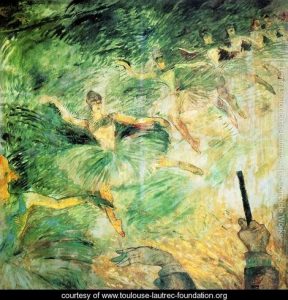
Ballet Dancers by Henri de Toulouse-Lautrec

Image courtesy of the Henri de Toulouse-Lautrec Foundation
Painting entitled: Ballet Dancers
Shared under the Creative Commons attribution

Creative Attribution. Giving credit where credit is due. You may notice, I always post where I get my pictures for my blog, even if it is from the Internet Hive Mind or Facebook posts. Creative attribution is important, not only because it is the (copyright) law, but by acknowledging the hard work of others you encourage them to continue and others to attempt.

Copyright is important. Economic and sociological studies have shown that in countries where people have their property protected from confiscation, physical or intellectual property, they are more likely to create beyond bare needs. If people don’t realize any gain from the hard work of creation, planting crops or developing software for example, they aren’t going to continue doing it. They are going to pour effort into those items where they or their family has gain, or at least meets the necessities.

At the end of the day, the priorities for people are food and shelter. If their work does not gain these items, and they have no other means of gaining them, they will switch work … or die.

A no-brainer decision.

If they have food and shelter, and leftover time beyond that, they may invest it in creative activities which don’t put food on the table. But if they have a choice between creative activities with different levels of profit, so they can get luxury items like clothing, Internet, and transportation, they will choose toward the greatest profit and personal enjoyment. For some people, like painters, the personal enjoyment comes from the activity.

By always acknowledging the personal efforts of people, and following the copyright levels they choose, you are supporting them … and they will create more cool stuff. Modern life allows a lot of free time, granting people the ability to post stuff online just to give away. Wikipedia is just one of the phenomena related to modern life’s free time.

In closing, I would like to mention posting the Creative Attribution is just good manners. Like writing a thank you note. Someone took the effort to make something you can use for free. Putting their name to it is a big thank you shout out.

Needless to say, this subject is important to me … as an painter, calligrapher, editor, writer, and embroiderer. I do a lot of free stuff I share; I also do a lot of stuff just to keep a roof over my head. Thank you for recognizing my work, for buying those things I do sell, and for sharing what I give away for free. I appreciate it. Without you, I would be doing my arts a lot less.