Blog

Other Cool Blogs: Books YA Love

Do you have a Young Adult or Middle Grade reader at home and are wondering what books are out there that would be good for them to read? Well, during my A-to-Z challenge I ran across a blog by a Librarian named Katy called “Books YA Love”. It has over a thousand books previously reviewed and she added to it extensively during April.

The review that most caught my eye was “U is for the Untold story of Jean Wright and NASA seamstresses: SEW SISTER, by Elise Matich (Nonfiction Picture Book) #AtoZ” which I will need to read as soon as I get a moment, but there are other treasurers there too.

If you need children and young adult stories, this is a blog to follow.

For those that like to cut and paste URLs: https://booksyalove.com/

Book Review (SERIES): Stella Hart Romantic Mystery

Original Amazon Cover

Stella Hart Romantic Mystery series by Lucy Blue
Book 1: Guinevere’s Revenge 
Book 2: The Passion of Miss Cuthbert
Book 3: The Baronet Unleashed
Book 4: The Princess and the Peonies (to be reviewed at a future date)
Book 5: Le Jazz Hot (publication date 5/22/2025 – in two days!!! – look for my review on my Goodreads account, follow me there)

The series just keeps are getting better and better the longer it goes on. I wasn’t enthralled with the first book, but I got an early read of the the fifth book and am completely in love.

Amazon Cover

BOOK BLURB ON AMAZON for GUINEVERE’S REVENGE

Downton Abbey meets It Happened One Night in this 1920s romantic mystery romp.

American silent film actress Stella Hart has been terribly fond of her English “step-cousin” George ever since his uncle, Lord Barrington, married her mom. She’s a lot less fond of Mavis, his grotesquely snobbish fiancée. But when the lovesick gangster that Stella fled Hollywood to escape tracks her down at Barrington Hall, George pretends to be engaged to Stella to put him off the scent, and Mavis, poor girl, plays along. Then Stella and Mavis find a dead man in the woods, and things get really exciting.

The only likely witness to the murder is Guinevere, Mavis’s fuzzy little Bichon Frise. And Stella’s best suspect is George.

MY REVIEW for GUINEVERE’S REVENGE

The book is exactly as advertised. A lovely frothy screwball romantic mystery. 100% beach read approved.


Amazon Cover

BOOK BLURB ON AMAZON for THE PASSION OF MISS CUTHBERT

Stella Hart is looking forward to five blissful days alone at sea with her new fiancée, George—no relatives, no responsibilities, nothing to keep them apart. But Stella’s bosses at Pinnacle Pictures have other ideas. Miss Cecilia Cuthbert of the London office is on board to be her chaperone, and she will not be dissuaded. If Miss Cuthbert has her way, Stella will spend the whole voyage holed up in her cabin answering fan mail and signing autographs.

Desperate for freedom, Stella comes up with a plan. With the help of one of George’s old school friends and her own genius lady’s maid, Sophie, she will transform the ugly duckling chaperone into a distracted, happy swan. But while Stella only means to help Miss Cuthbert have her own shipboard romance, the result is murder.

Continuing the murderous and madcap adventures of silent movie actress Stella Hart that began in Guinevere’s Revenge, The Passion of Miss Cuthbert is another Agatha Christie romantic mystery Mrs. Christie somehow neglected to write. Acclaimed romance author Lucy Blue has created a classic 1920s detective with a modern chick lit heart. Also included: a short story adventure, “Guinevere’s Christmas.”

MY REVIEW for THE PASSION OF MISS CUTHBERT

Another delightful romp with Stella Hart, Hollywood Siren, and her long-suffering love George. Crossing the Atlantic takes time and Stella hopes that it will include Alone Time with her betrothed, despite the unexpected meeting of several old school friends of his and an equally unexpected chaperone provided by her movie company to keep her reputation unsullied. Her plans for mischief are outnumbered by well-meaning people.

Mischief finds her anyway with another dead body crossing her path. Most annoying.

She just HAS to investigate or the wrong person will go to jail for the crime.

Pitch perfect sweet romance with murder mystery. A beach or pick-me-up read (for me a Friday read after a long week).


Amazon Cover

BOOK BLURB ON AMAZON for THE BARONET UNLEASHED

Who DIDN’T want to murder Nathan Stanley?

Stella Hart has less than a month to finish her latest picture and sail home to England to marry her darling George. If she postpones the wedding again, her mother will disown her, and even the groom is getting restless. When her swashbuckling co-star smashes into a wall and breaks his nose, putting production on indefinite hold, she and George make plans to slip away and leave the movie unfinished.

But studio head Nathan Stanley has other ideas. He threatens Stella with scandal and ruin if she doesn’t stay in Hollywood. As a free agent and the future wife of a baronet, she can afford to let him do his worst. But when Stanley turns up stabbed to death with a dueling sword, somebody has to solve the murder.

Buckle up for flappers, floozies, gangsters, jazz, speakeasies, murder, and mayhem in 1920s Tinseltown in this third installment of the Stella Hart Mysteries.

MY REVIEW for THE BARONET UNLEASHED

While not as much of a lark as books 1 and 2 of the series, The Baronet Unleashed is still a delightful romcom-style murder mystery. I think why it is slightly less fun this time around is Stella is working rather than traveling. Sure, Stella thinks that acting is the bee’s knees, but day-job is day-jobbing; something always takes the glitter of the gold.

The tradeoff of the fun is a great deep dive into the American film industry in the twenties, which brings its own type of satisfaction. Ms. Blue has talked about her love of Hollywood History at cons and on her blog (no, I don’t stalk this wonderful writer … much) and it shines through in this book. The worldbuilding for the Stella Hart series is top notch from the characters to the transportation choices (ships and cars) and the clothing.

As to the plot, Stella stumbles across another body, her loving George (now fiancée), just a few steps behind. Between the rushed shoots of the movie and packing to go to England for the wedding, Stella pokes her nose into speakeasies, lives of the famous (hoping to be rich), and police business trying to solve the mystery.

As I said, a delightful cozy mystery. You can read the books in any order; they each work as a stand-alone, though the cast of characters build throughout.

Flash: The Biggest Wall

Photo by Tim Mossholder on Unsplash

“Dang illegals taking honest work from honest men.”

I was stuck at the table with him again. My wife and his wife got along great, but him and I, well, our views on life didn’t match. But side-by-side we sit at another church potluck.

“Oh, you want to work in the fields in 100-degree heat in the summer?” I couldn’t help but prod him.

“No. I’m retired. But you know, someone could.”

“Yes, I suppose.” I debated if it would be bad to take a third turn around the dessert tables, not to pick something up but to get away. “But then they would have to be paid minimum wage and given safe housing. I think the studies show that the price of produce will double, unless we start underwriting it like we do the meat industry.”

“Harumph. We don’t underwrite the meat industry. Farmers are hard workers.”

“Yes they are. God’s own.” This time I wasn’t sarcastic. My brother and the family he married into operated a farm just outside of town. “I thank God for them three times a day. Every meal is possible because of them and the immigrants they hire.” I should have stopped before I added the part about immigrants, but “welcome the stranger” had been drilled into me by my Southern upbringing. I don’t know how others didn’t get the same message.

“Dang immigrants. Always sneaking across the border. We need to get that wall finished.”

“You know, there is a solution to stop immigration, better than a wall.”

“A wall is the best thing.”

“Walls always fail. The Great Wall of China didn’t keep the Mongols out. The wall the Romans put up to keep the wild Scots out after they conquered England was a complete fail. The Berlin wall fell in our time.” I gathered my wife’s cardboard plate and my own to take to the trash.

He followed me with his wife’s stuff. Of course he followed me. “So what would be your solution?” he hissed, like nothing could beat a wall except his hard head.

I leaned against the foldable wall carefully, the one usually dividing the fellowship hall into classrooms. “First, you need to define the problem. And it isn’t immigrants coming here, but why they leave where they are. Stop and think a moment. How bad does where you are has to be to make you leave everything behind and go to a country where you don’t speak the language or understand the laws. Where you have no friends and no support? Your family gone, your community gone. Think about that situation. People don’t come here lightly.”

“They hop the border all the time.”

“They cross desert. Sometimes walking hundreds of miles. Why would a person walk hundreds of miles from everything they know? They have to believe where they are going is going to be better than where they came from.”

“Exactly. They’re lazy no-goods wanting to take our social security.”

“I thought you said they were stealing jobs?”

The red either side of his neck started going up. I had promised my wife I wouldn’t get in a yelling match with him again.

“Back to the solution that is better than walls. I am working from the hypothesis, and I admit I could be wrong, but immigrants are always functionally refugees. That sounds bad. My white male privilege is showing. Sorry. But essentially where they are has become inhospitable to them or their family. Either no chance of a better future for their children or things are actively endangering them. They see our ‘Land of Opportunity’ as being better than where they are; a chance of survival and maybe even thriving. Despite language differences and uprooting their entire lives.”

He crossed his arm and braced his legs. I chose to ignore two of the gossips at the next table watching us like we were their soap operas.

“Based on that premise of why they are coming here, which, you have to admit is more important than what they do before they get here, right?”

“Right.” He nodded.

“There are two solutions, better than a wall to prevent them from coming, because anyone willing to walk hours, days, weeks even,  through a desert isn’t going to be stopped long by a wall. Right?”

“Right.”

“The solutions are: one, make things better where they are, so they don’t need to leave, or, two, make things worse here so they don’t want to come.”

He frowned.

“A good international presence, working to make lives better for everyone—”

“And send our money to foreigners?” He cut me off.

“To help our neighbors, as Jesus told us to do.” I snapped. A quick inhale and exhale had me refocused. “Safer places to live mean people don’t feel the need to escape to save their children.”

“Still, sending money overseas sound like socialism to me.”

“Well, the other option is making America so inhospitable and dangerous no one wants to come here.”

“That isn’t going to happen. We are making America great again.”

“That should do it.” I started walking to the table where our wives sat. My beautiful, loving wife saw my approach and picked up her purse from under her chair.

(words 873, first published 6/21/2025)

Editing Rant: Why AI is a No-No

Image acquired from the Internet

A recent contact I got was a “Hi, I am an illustrator who uses AI.” To which I immediately responded my publisher (and I) have a strict no-AI policy. (points to them for admitting the AI use up front.)

Well, they wrote back and asked why? They said they got a lot of responses like that and were wondering why the publishing industry is so against this tool everyone in the business world is embracing.

I needed to present an argument that wasn’t “well, AI is evil and makes Sarah Connor cry.” Because this person is trying to make a living with art, which means creating art fast in a variety of forms. AI can be a tool like the collage-type art of early photoshop. And for some people everything is shareable – I remember early pirate sites for music and books created by those that thought all data should be free. So what argument to use?

I gave the person the “the courts have declared AI-created materials are not copyrightable.” The fact is who do you attached the “creative” part: the people whose materials and skills the database is built-on (whether the material was bought legally or collected for AI training (like most medical interpretation softwares), mass-trained through people licensing the equipment and uploading suggestions (like many editing softwares), or mass-scrapped/stolen (like most artwork and writing softwares)); the assemblers creating the database; the programmer/team/company that created the search engine/AI platform; or the person using the AI to create the image per their specifications.

When publishing companies (and other companies) cannot attribute copyright ownership, they can not go the AI route. Contracts require clear lines of ownership to distribute rights. (Side-thought: Companies using AI-generated marketing materials, really should rethink their choices, because I bet if you can’t get copyright, you can’t get trademark either.)

Anyway, the person thanked me, saying no one explained it that way to them before.

AI isn’t inherently evil, but there are other considerations and maybe we writers and artists should start pointing out the “bottom line” for companies using AI isn’t protected rather than argue the ethical and moral stances. Many people only are able to listen to money. No copyright, no contract, no clink-clink.

That being said, many aspects of how humans are implementing AI are counter-productive to society as a whole and individuals in general, which ethically and morally could be interpreted as evil.

Ethically, the database builders doing the mass-scrapes, stealing materials under copyright is wrong. Especially when the follow-up programming to access that database includes suggesting prompts where copyright is worked around: create a drawing in the Style of Disney or write a horror book in the style of Stephen King. Both are clear violations of society’s agreement to protect people’s intellectual property so their efforts are paid and they have the opportunity to continue to create what people think is worthy of purchase. The owners of the creative materials did not agree to this use. Ethical sourcing of the materials for the databases needs to be required.

Morally, the electric and water required for datacenters, when the infrastructure is already stressed and normal people are constantly being asked to save irreplaceable energy resources like uranium, coal, and oil, is abhorrent.  While on some levels, the mass-use of the AI-products expands the capability and considerations of LLM (large language models) and AIs (artificial intelligences), making developing of productive uses of AI easier. For example, using AI to figure out how to water crops and target pesticides increases food for all. Also using LLMs to look over medical tests and crunch numbers beyond what humans are capable of save lives. Both of these uses are beneficial, and having everyone exploring LLM products is bringing down the price while also encouraging programmers and companies to discover more uses.

But programs like ChatGPT are being used indiscriminately because people aren’t seeing the cost. Right now the companies are underwriting it in the hopes to make even more money later, but “a single 100-word email in Open AI’s ChatGPT is the equivalent of consuming just over one bottle of water.” (Garrison) Making five quick pictures of you as various Disney Princes is equal to a day’s worth of water for one person. And that isn’t even counting the energy use. (The water is used to cool the heat generated by datacenter computers.)

People are using ChatGPT to write grocery lists. Is a grocery list really worth a bottle of water plus energy? The destruction of trees and habitat for the large area needed for these centers?

I know one email doesn’t matter, but just imagine several cities worth middle schoolers figuring out which version of Pokémon is the best version of their pet, with all the twenty-somethings using it for groceries lists, and all the tech bro saying “send out an email on a meeting about using paper straws to save the environment,” and you can see where the waste of limited resources becomes objectionable.

With the present issues with climate change, is the energy and water use of the datacenters for entertainment purposes appropriate ethically and morally? Is it appropriate to build datacenters on an already stressed electric grid with rolling blackouts just so people can have help writing simple 100-word emails? And is AI/LLM programs and apps the best way to write those emails?
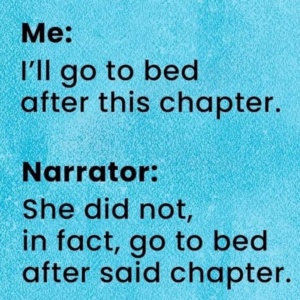
TL/DR: Authors, artists, and other creatives have a love-hate relationship with AI, balanced between an exciting new creative tool and the exploitive, illegal tapping of the creative community by scraping intellectual property for training LLMs. Publishers and those whose business model is based on protecting intellectual property cannot put AI-generated material under contract because of legal considerations of rights and ownership. Additional ethical and moral consideration of the wide-spread use of LLM and the related datacenter industry required to support them makes causal business and entertainment uses of LLM and AI questionable.

Final Thought: I want machines to do the boring grinding repetitive tasks so I can make art and write books.


Bibliography

Garrison, Anna. “How Does AI Use Water and Energy? Unpacking the Negative Impact of Chatbots.” GreenMatters. 2025 Jan 10. https://www.greenmatters.com/big-impact/how-much-water-does-ai-use – last viewed 6/8/2025.