Blog

Geeking Science: All the Dirt

Hands Holding Seedleng Stock Photo

Image courtesy of adamr at FreeDigitalPhotos.net

November, election month, what better time to talk about dirt? I’ve been totally into dirt this year with my gardening project, which is finally winding down just as the winter holidays begun. Hopefully everything I planted will survive the winter and the benign neglect, who am I kidding – full out neglect, until tax season is over.

Now to Geeking about medicine and dirt.

In 2015 a new possible antibiotic, the first in 30 years, was found and named teixobactin. This is way cool as superbugs continue to develop because far too many people do not take the full course of medication. Now we have something new to fight the fast evolving bacteria.

But even cooler is how they found teixobactin. They got it studying dirt.

Scientists have known dirt has a lot of possibilities for suppression of bacteria, viruses and other microlife; the challenge has been when soil is removed from its culture and studied, all the good stuff in it quickly dies. They couldn’t keep what they needed to study alive long enough to study it with the sampling methods available to them.

This changed when Northeastern University (Boston, MA) created a new way to isolate chemical compounds in soil using an electronic chip.

Now a whole new world has opened up for studying the microbes in dirt.

And for the science-fiction people – what this means is we may have a way to study dirt while terraforming planets. The first stage to make a planet hospitable will be creation of dirt and atmosphere. Humanity has gotten a good handle on the atmosphere at this point but making living soil, with all of its aspects, has been inconceivable – we didn’t even know what we didn’t know about dirt. Being able to study soil with this new tool changes the impossible to impractical. We will need more tools to make it practical, but we are getting there.

The full scholarly article can be found at: Teixobactin, the first of a new class of antibiotics discovered by iChip technology? by Laura J.V. Piddock. Published June 18, 2015 in Journal of Antimicrobial Chemotherapy.

Author Spotlight: George R. Dickson

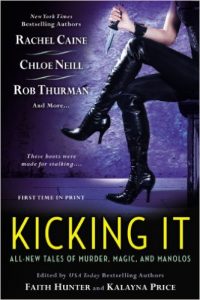
Book Cover for Dorsai!

Book Cover from Amazon

While in recent years Heinlein has been considered the father of military Science Fiction with his Starship Troopers released in 1959, the truth is Dorsai! by George R. Dickson came out the same year and they could arguably considered co-fathers of the military subgenre. I believe Mr. Dickson’s works didn’t gain the mass popularity of Heinlein’s works because the battle focused on a officer planning and preparation standpoint instead of the survival of the grunts; more people have been enlisted than officers. Also Mr. Dickson’s books had less sex, that likely had some impact on young men picking up the books.

I vastly preferred George R. Dickson growing up, my mother feeding me both authors as I expressed interest. Even in my early teens I craved worldbuilding, and the Child Cycle had it all: religion, politics, environmental features impacting battle plans, A LIBRARY (oh, the library!)…  Military leadership has to have a big picture and Mr. Dickson supplied it. The series spanned his entire fifty-year writing career, with side journeys into fantasy, children books, and short stories. Over sixty book in all published during his lifetime, not including collections of his short stories.

My high school freshman year research paper on a famous author was on Mr. Dickson’s Child Cycle – someone my teacher hadn’t hear of and never had had a paper on before. He actually took me aside to talk about the paper; the teacher clearly enjoyed having a new topic to read about rather than another Charlotte Bonte or other literary master from the school’s “must-read” list.

If you have never read anything by Mr. Dickson before, I would recommend starting with Tactics of Mistake. Try the Amazon preview and see if appeals. If you asked me what influenced my earliest study of writing, I would point you to this man.

Flash: On Call

“Don’t you dare take that call.” Brianna hissed.

Wally gave her an enigmatic smile of apology while stepping away to activate his implant.

Brianna hated his job. Yes, the pay was fantastic, but as the system specialist he was on call 24-7. His multi-trillion dollar company even paid for the new telly-com implant so he would never miss a contact. Often when they were at dinner, he would start scrolling through his email. Before when she wanted alone time with him, she would hide the tablet or arrange for the battery to run out. Now he was the battery.

(words 99 – originally appearing at Sunday Fun on Breathless Press 12/23/2012 with the visual prompt inspiring it before the site was taken down as well as my blog; could not find photo copyright permissions so did not copy; republished new blog format 11/13/2016)

Editing Rant: Copper Pennies

Fingers Holding A Penny Stock Photo

Image Courtesy of Gualberto107 at FreeDigitalPhotos.net

What do your characters know?

So last editing rant I went off about Know Your Topic. You don’t want to lose readers because you presented parasailing or embroidery incorrectly. If you don’t know the topic find someone who does: topic experts, beta readers, at least a research librarian whom you are keeping in chocolates and coffee.

Equally important be aware of what you character knows.

This isn’t limited to the more common Point of View (POV) main character (MC) limitations; you may know character B dyed her hair yesterday, but MC doesn’t know yet so describes character B as a blonde. Don’t get me wrong, as an author making certain you only let your MC work from the information known to them rather than to you as the writer is essential. And challenging.

But you also need to limit them on what they are familiar with. Having a twenty-fourth century engineer know how to use a twentieth century keyboard to input information into a computer system is improbable.

Or a twenty-something person forty years after the zombie Apocalypse comparing the scent of blood to new pennies. Yes, this is a common comparison to the point of being clique. But someone born after coins stopped being minted isn’t likely to know what new pennies smelled like.

A person who has never seen the shore would not understand what the salty breeze meant.

Someone who had never been off a spaceship isn’t only going to be shocked by no sky – no walls is as big an issue. And the ship isn’t breathing. Could they even sleep at night? No mechanical noise means “we are all about to die”. How long does it take for the panic to wear off?

Back to the Smell of Blood – as an editor I couldn’t rewrite the line about new pennies. But I did find an article on the scent of blood. If you are describing lycanthropes, vampires, or just have splashes of blood throughout your manuscript you may want to follow the link to Writeworld – “Describing the Smell of Blood”. (AMENDMENT  on 10/24/2019 (original post 11/8/2016) – The link for the Writeworld article  is now dead. Search on “describing the smell of blood”, there are a lot of resources now.)

(sigh) … And it is research like this that puts writers on watch lists.

WRITING EXERCISE: Create a scene (500 words or less) where your WIP character describes a common day item on your desk s/he is not familiar with and what the actions are taken to discover its use.