Image courtesy of foto76 at FreeDigitalPhotos.net
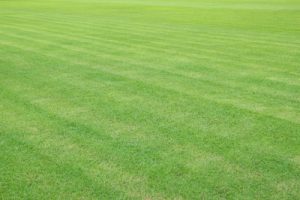
The walks surrounding the Inter-species Conference Enclave campus meandered through immaculate lawns, stopping occasionally to admire rose bushes, day lilies, statuary, and other areas of interest with a widening of the brickwork and a bench here and there in their travels. Azza followed the paths with her human counterpart at her side. Arching a fur-feather eyebrow, she asked the much taller black male, “Why do you dedicate so much land to non-food?”
The use of the “her” pronoun was problematic for both Azza and Sefu, since the Spican species had only one gender. But because of the average height of the Spican, their high voices, and their offspring liquid gland locations match human female norm, the pronoun had been applied to all Spican members since the humans had found the first Conference planet. Sefu, one of Earth’s polygots chosen to learn the interstellar tongues, was still struggling with the Conference tongue, a constructed language used by most spacegoers, and Spicese, a complicated language constantly expanded by the natural linguists of Azza’s planet for play and professional reasons. As a result, most of Azza’s and Sefu’s conversations fell back to the gender-driven English language of the country where the campus had been located. He tried not to limit his view of Azza with the pronoun, but thinking in a language always limits some concepts. Kenya would have been a better the host nation with the genderless Swahili to communicate in, in his unasked for opinion.
“Well, umm, if we put all the land to food usage it will exhaust the ground.” Sefu struggled in his answer. “It would require constant fertilization and work.”
Azza nodded like a human. “So, you rotate this … grass … with other crops?” Her species specialization as linguists made Sefu jealous; in three handful of months she mastered the complicated English language complete with the non-verbal cues. The specialization was spectacular even among the Conference members, therefore Spican’s always were the Speaker for the first Enclave sent to newly discovered civilizations. She had already sent the full report of English and Mandarin back to the Conference Core so those languages could be added to the translators. The present language assignment for the Enclave was Spanish and they were already making arrangements for Hindi. They would continue down the line until they reach languages of less than a million speakers. Azza and the six other Spican on the Enclave were having a ball; most species only have one, maybe two languages when they reach interstellar space.
On the human side, they had the basic grammar and over 1,000 root words for the Conference’s Every-Speak, and the computers had recorded nearly 89,000 words of Spicese with no end in sight for the intonation, non-verbal, and grammatical-vocabulary-modification nightmare making up the linguists native tongue, a language so complex they could easily pick up any other language in the galaxy. With approval of all forty members of the Enclave, recording instruments had been installed throughout the campus and gave them a good grasp of Pegasian, Ursate, and Virgrril, though Mensate baffled the biological and computer translators as much as Spicese so far. The one Lucian of the Enclave, with its light-based communication, was beyond their abilities, at the moment; the Conference translator would be working overtime for it as soon as the new programming became available. A Lucian colony was the human’s closest neighbors and their first market and both the humans and Lucian were chomping at the bit to start, but the Speaker declared, as was traditional, no trade talks translations were allowed by her team during the first generation of contact. The inexact translation by machine would have to do for the businessmen once it became available in another eight years. The major hold up was just travel time for the language assessments to get to programmers.
“No. We use it for aesthetic purposes. It is decorative.” Feeling slightly less provincial since the alien had searched for the word grass, Sefu paused in his walk to watch her non-verbal cues more closely.
Azza swiveled her head slightly further than humanly possible, taking in the landscape. “It is very green.”
“Yes.” The Earthling born on the African continent agreed.
“Does the grass ever fruit?”
Each of the visiting species had shown pictures of their homeworlds as part of the linguistic and cultural exchange required before full Conference membership approval. Azza’s home commune was a riot of color from food-bearing tree and bushes.
Shaking his head, Sefu explained, “We cut it before it goes to seed, that makes the root system stronger.”
Azza’s face wrinkled in consideration. “Is any other maintenance required?”
“Other than mowing every one week or two?” Azza’s eyes widened. Sefu understood from the monitors they had been allowed to install the Spican applied a defoliator and bleach to remove stripes which normally ran across their face so the humans could better read the non-verbal cues they were mimicking. Internally, he looked forward to the day they trusted the humans enough to stop doing that. It would mean they were considered equals. “Yes. The landscapers have to lay in weed killer and bug killer and fertilize every fall and spring. Plus reseed regularly.”
“So the grass requires as much work as food crop.” Azza looked out at the lawns again. A sweet smell similar to honeysuckle drifted on the breeze, a scent Sefu noticed whenever Azza was figuring something out. He made a mental note to see if the odorific monitors had been installed; part of the Spicese non-verbal language had to include scent.
Turning his tone a little dry, knowing sarcasm did not translate well with any of the Conference members but the Ursians, Sefu commented, “More, actually. Crops only need to be cut once.”
The honeysuckle scent grew stronger. “Wasting land and effort like this is not logical.” She waved her hand at the acreage surrounding the sprawling buildings.
“Humans are not logical.”
“You keep saying that.” Azza looked him in the eye. “And I keep seeing evidence of truth.”
Sefu shrugged.
“It’s amazing you ever made it into space.” Her face mimicked exasperation, and her scent changed to sour green apples. Or more accurately zefs, one of the few things already transferred in the cultural exchange. Zefs, a quick-growing berry, had dozen of variations made suitable for zero-g growth; the four space stations already integrated them into the crop cycle. The campus greenhouses grew some of the gravity varieties for the visitors, after Earth and Conference scientists confirmed the variations were mules in every of Earth’s environments, so Enclave members had a taste of home, and Sefu had eaten some during the meal visits.
Those were landmine filled occasions as each of the six visiting species had different customs related to eating before even taking into account the cultures of the nineteen Earth polygots drawn from six different continents. Each meal centered around a different species’ tradition with five days of instruction beforehand; fourteen times they had been through the rotation since Sefu joined the team and they still had nine more of the Virg causal meals to go before they started on the formal variations.
He looked forward to the Lucian weeks as they only ate socially during mating mergers, what humans call weddings. Otherwise consumption could be done during any activity such as playing games. Falling-Wavelength-552-to-577 turned its meals into game nights, the primary social activity for its species, many of the games had human equivalents. It had fallen in love with Chess when Judit used the human game to explain K-band-frenquency-19 to the rest of the team. The Lucian meal nights left the Pegasian and Mensate on the outside, but then most meals left the Lucian sitting alone.
“Getting into space only requires determination, not logic.”
“For your species.” Azza blew out her breath, then started walking again. A little faster than before, so Sefu needed to stroll instead of saunter, to match her short steps. “Your ships make as little sense as you.”
Thinking about the very functional, nearly universal stick and globe assemblages passing for spaceships among the Conference members, with only minor variation for environmental difference, compared to the sleek human ships, Sefu bragged, “They look great.”
“Ships do not need to look great,” Azza spun on him, her hand flung sideways while the calluses rotated into thorn-spine positions in her species version of frustration, while the skin under where the stripes would be if they hadn’t been bleached swelled slightly. “They need to function well.”
“They function fine.” Sefu felt amusement at the cute anger shown by the Spican. Quickly he cut off that emotional reaction. This was not an American or Australian female getting riled up, but an alien species and head of the Enclave. Damn English thoughts; he really wanted to switch to his native Swahili. “They got us to a Conference planet before you guys found us.” The colonial swagger-laden words tripped out of his mouth before he could stop them.
“True statement.” The white and gray skinned alien, topped by black feather-fur dappled with blue and red highlights, brought her arm back to a more human stance and the nearly human facial features, which caused the polygots no end of grief because they made it too easy to forget the Spican were aliens, returned to resting levels. A mimicked half-smile touched Azza’s lips. “By practically exploding the engine room every activation of the DM drive.”
Sefu gulped internally. Was the anger and frustration real or this half-tease? Was Azza here just to teach language and culture, or did a darker imperative drive the cultural exchange? The humans weren’t the only species to create a Dark Matter drive, but, according to the Conference, less than 10% of new species even had worked out the theory before crossing paths with a Conference outpost. Earthlings were one of seven species to invent the drive completely on their own. Being in the back-end of nowhere, at the edge of a spiral arm, contributed to the Humans developing the theories and ships independently. That backwater location combined with a jump from electronic communication having bleedoff past the local atmosphere to interstellar flight in less than three hundred years, when the average for most species is closer to two thousand years, prevented any of the Conference cultural surveillance drones from spotting them before humans blinked out of DM warp in their sleek, rotating hub and spear shape ship into the Alpheratz system and its three inhabited planets.
Licking his lips, Sefu decided to poke to see which way Azza jumped. “Ah, but the results of the controlled explosions are cool. What is it? Four times faster than any other DM ship out there?” And that was very fast indeed, since DM speed was measured exponentially due to energy-state transfers within warp, which means a Conference spaceship from the Lucian outpost in the Cervantes system, 50-light years away, takes nineteen weeks with their fastest ship. A human DM drive ship takes six days, including the sub-light maneuvers.
The skin raised again, but Azza’s face remained neutral. “The human interpretation of DM theory is intuitive rather than deductive, at best, making your drives irrational disasters. The Earth ships already have the worst safety record of any Conference ship, but you only care about how fast and …cool… they look?”
Sefu forced himself to imagine her saying the words through gritted teeth instead of with the calm almost indulgent mimicked expression on her face. His gut told him he was right about the anger. He stepped sideways so the nearby monitor could have an unobstructed view of her. Deciding against overtly flagging the conversation for closer review since this was Azza and all her conversations were dissected, Sefu poked her again. “Humans are not logical.” And, obviously, the Conference could not reverse engineer the human version of DM drives and they were applying pressure to the Enclave to get results.
“No, humans grow grass which has no purpose other than be green.” She blew out air, and the scent of burnt starch, like plantain slices fried too long, made Sefu’s nose burn. He never had noticed that scent before.
Arranging a careful smile on his face to match her false one, Sefu said, “Exactly. You are beginning to understand us Speaker.”
“I hope not. I really hope not.” The alien and human resumed their walk, a pseudo-companionship silence falling on their travel.
Privately, and against the fiber of his communication-oriented polygot soul, Sefu agreed.
(words 2,083 – first published 7/30/2017)