
Image acquired from the Internet Hive Mind
Click here to see for Donna Tartt’s book The Goldfinch
Image acquired from the Internet Hive Mind
Click here to see for Donna Tartt’s book The Goldfinch
A competition caught my eye last Friday (7/5/2019) – write a flash in 24-hours this Sunday (theme to be announced). The website looked rather new, and I’m not sure the e-zine has been published yet, but I thought, why not? If I have time. The time would be weird because the host for the competition was clearly overseas (prices for other competitions listed in pounds instead of dollars, though this prize was just publication).
On Saturday a little afternoon, I say the theme pop by “Loss”. Ugh. I rolled my eyes. Ten thousand people writing about death and hurts. Well, count me out. A little later my brain said, what if … you don’t focus on depression. Can you make it an action-packed Urban Fantasy? Suuuuure, why not stick all that in only 500 words? Well, you were just talking to someone about your “Archaeology is the Best Major” for it’s creep factor and thinking about creating a new series for Martini Martinez, an Urban Fantasy Monster Hunter – and that boyo from Archaeology is a monster in human form. Nah, that would be … well, maybe. And I went to sleep, playing with the idea.
Sunday morning I wrote the untitled story and it came out to 683 words. The flash, including the title, for entry had a 500 word max. So I chopped out some of the backstory for the series for Martini and her Intern Brandon. Then I chopped character actions and streamlined and hacked some more. Finally I had 495 words and I titled it “Three Losses”.
I placed – didn’t win. That went to Mermaids and Monsters, a flash close to what I expected most submitters would be putting forth. I broke the rules – although all three of the characters of Three Losses lost their battle after a fashion – so I’m not surprised I wasn’t number one. I was surprised to place in the “runner-up” category with five other writers. There had been 37 entries.
So “Thee Losses” is published in the July E-Zine “Dare to Write It” ) put out by All For Writers. I will publish the flash sometime next year as part of my normal Sunday materials.
It’s a sequel to Archaeology is the Best Major. Let me know if you want the third installment. By the way Martini Martinez, as the name kind-of indicates, is meant to have a humorous story approach. I do not know why she showed up here. This is much more a Younger type of story.
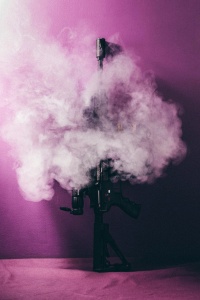
Photo by Vladimir Palyanov on Unsplash
I’ve talked before about Permanence of Object. Part of that concept includes Chekhov’s Gun – a “dramatic principle that states every element in a story must be necessary, and irrelevant elements should be removed, elements should not appear to make ‘false promises’ by never coming into play.” (Wikipedia, Chekhov’s Gun entry) The supreme example of this is a rifle is hanging on the wall in a play’s first act, it should be used by the last act.
The reverse is also true – if an object is used in the last act, it should appear before its use.
But the bare-bones dramatic principal can be taken too far. I recently read a novel where if something is introduced, I knew it would be used. While the Chekhov’s Gun principal is the gold standard for short stories and plays, which need to be trimmed to the basics, novels should wander a bit, introducing non-essential side stories as red herrings, especially if the main plotline is a mystery. In this particular manuscript, every little side bit glared like the Gun on the Wall. Scuba gear in the admiral’s office, the spy was about to be sent somewhere he needed scuba gear. A book, needed to be read.
Not a single wander off the trail – straight shooting the whole way. Nothing felt woven, like a rich plot, the whole book felt like a string of beads, one after the other. Every “aside” I read propelled the story forward full-steam. The side trips feed into the main plot. No emotional subplot, not growth subplot.
Sure, no White Box issues. But only because when I (as the reader) walked into a room, there would be one object which would be relevant to the story and described. Otherwise, the POV character I was following wouldn’t have gone into the room.
The novel felt similar to a video game where the developers didn’t provide any side-quests, nor the opportunity to go off-script for a fail. A choose-your-own adventure with only one option at the end of each page.
I mean, yeah, that is actually the case of how a novel really is. But it shouldn’t FEEL that way.
When writing be sure to describe more than just the things needed for the main plot if writing in a longer form. Play a game of Clue with your reader – will the gun, the knife, or the candlestick be important to the plot? And which is the symbol of the inner angst the main character needs to resolve in their emotional growth?
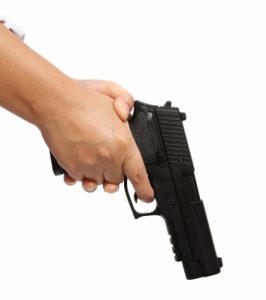
Photo from freedigitalphotos.net
Silence reverberated in Andros’ abused ears. He blinked rapidly to clear the spots from his vision. His team had thrown everything short of a nuclear bomb at the Unnatural, and if one included the rail-gun Parker carried which required the two-day output of a plant to charge, a fission bomb just might count. Maker bless the Taurusian energy technology.
Mortar and structural building pieces dropped with dull thuds onto the rubble from the destroyed walls and floors that used to make up the 33rd to 38th floors, churning dust clouds that tried to force their way past his lips. Andros refused to breathe, because the plaster bits would set him coughing. His broken ribs couldn’t take much more. He wanted to reach for the emergency oxy mask in his backpack, but that would require taking a hand off his projectile gun and neither hand would leave the overheated weapon. His lizard brain was not yet assured of the Unnatural’s death.
He cautiously sidestepped through the debris, keeping his team and the broken body of the young woman in sight. She was the youngest Unnatural they had ever fought, and, strangely, the most experienced. The cleansing team had been on her as soon as she was sighted emerging–less than six hours from alarm to annulation. They chased her from a sprawling boarding school where the wealthy and powerful trusted their children to the soaring ‘scrapers of Trade Landing nearly three hundred miles from the point of origin, leaving four team members behind, dying or disabled. They never let her heal, never let her think. They knew what was needed to get it done. She was their fourteenth kill in three years. Not the most heavily active cleansing team, but not an inactive agricultural planet team either. They were sharp without burnout.
The clatter of the ejected cartridge sounded tinny, but clearer. He could need to retrieve the mildly radioactive container later; heavy metal from expended uranium was not easy to come by and their accountant would have his hide. He snapped the replacement into his right hand, the independent-minded extremity willing to move for a reload. It had its priorities in order, breathing second, killing first.
Andros’ eyes were drawn to the blood running down her arm. The bright red artery and nearly blue vein liquids traced rivulets from a shattered shoulder, where brilliant white bones poked out through torn skin and muscle, pooling at the indents along her knuckles, creating an interwoven tribal tattoo like Dreanna wore. Still more than fifty feet away, the swirling dust eddies fooled his eyes into thinking her hand twitched. Once down, Unnaturals never got up again.
The fingers stretched and gripped a stone on the rubble pile she had landed on, a light glow emanating from the hand. Andros heard a whine start. His mind knew he was too far from his teammates for his damaged ears to hear, but refused to acknowledge the whimpering was coming from him. Cooking flesh battered his nose as he started shoving the ammo into the still too hot gun.
(words 513; first published 4/1/2014; republished new blog format 7/7/2019)
Image courtesy of pixtawan at FreeDigitalPhotos.net
Picture a hand pointing a finger out in front of you, the rest of the fingers curling into the palm of the hand. Which finger is pointing out? Now rotate the hand so it is pointing to the right side, is the front or back of the hand facing you?
Were you able to do that?
Congratulations, you are the part of humanity which can visualize in pictures. Not everyone can, and that can make writing descriptions very difficult. I never realized people can’t see in pictures. Find out more about that in Visualization, a blog post Catie Murphy created for Magical Words, the full post is here:
WRITING EXERCISE: Do you Visualize and to what level do you visualize? Is it full color? Can you hear noises? Is music playing? Can you smell anything? Can you backup the action of the scene? How about rotate the camera angle or focus in on features? How can you use this in your writing?
If you don’t visualize, how do you create a scene? Do you build from the characters out? Do you start at the walls and work your way in? If you don’t see inside your head, can you smell, taste, or hear anything? Is there any advice in the Magical Word post that helps you?
Now, create a scene. Just pop one into your head (if visual) or figure out one you want to describe (if not visual). It needs to be a location that doesn’t actually exist for this exercise, think science fiction or fantasy. Now write out the description, include at least two senses to describe the scene.
READING EXERCISE: What books have provided the best visuals (or other scenes) for you? In your current read, is there a particular scene standing out? Why is it effective?
***
I’m a visual person. Sometimes when I am writing, I close my eyes and see the scene and put my characters in the scene. Strangely the people are darkened out – them I don’t see clearly, but the room and pieces, I can focus in on. Usually I have some sort of music playing too, not necessarily the noises related to the scene.
For Roulette Leadership, I can clearly picture the trench area the men are huddle in. Dirt and grime clings to them, blood splotches, sweat stains, smell of men hard-pressed. Broken green light and shadow flickers across the faces. If I ever expand the flash, I need to add a lot more description.