Blog

Flash: Fallen Angel

Image by marcolm on FreeDigitalPhotos

“I’m so sorry.” The man hopped on one leg trying to get into his pants. “Sorry, so sorry. I… I’m sorry. Sorry.”

Sarif shyed her soulful, tear-filled eyes away from the man and his still excited prick, biting her abused bleeding lips. Hiding behind her blonde tresses, she turned her face into her shoulder, curling her legs to her body and gripping the angry red and purple bruises on her arms while holding the sheets to her breasts. Behind her, pure white wing spread wide, proclaiming her angelic heritage.

The man kept up his sobbing non-stop apologies, sticking his arms into the shirt and buttoning it up, missing several connections in his haste. He left one shoe behind when he slammed the door, running, trying to escape from his guilt. It chased him from the apartment and down the hall, into the rest of his life. Rage and self-hate grew daily as he never could forgive himself; anger at his unholy actions brought his fists up again and again, striking out at others in blame for his own failings, until his destroyed future crushed him.

Waiting, waiting, just in case he returned, Sarif held the pose, not moving, thinking on her short time with her rescuer. Just two days ago, the man had discovered her bruised, broken body from the side of the road after another one of the unending clashes with her opposites in the Battle. Caring and eager to help, he bathed her wounds while his eyes stared at her glowing soft wings. Her diety-blessed healing, restoring her within hours, astounded him further. Since he first lifted her up out of the muddy trench, the man never left her side, rapidly falling in love. Being human, sexual frustration slunk behind like a jackal, waiting for moments of weakness. Possession flared his emotions, one log upon another in the bonfire of his unhealthy desires: his angel, his love, his rescue, his female. Until the only thought remained, the coveting of heaven’s own, a single concept, — “his”.

Finally assured man wouldn’t be returning, Sarif started laughing. Full body shakes took her, slipping the sheet down perky, eternally-young breasts to pool around slim girl hips. Never had she had a man succumb to her temptations so quickly. A new benchmark for her to break. Why humans thought her kind were wrinkled, red, horned, and ugly, she would never understand. They were fallen angels; no one had taken their wings.

(Words: 409; First published 10/27/2019)

Other Cool Blogs: The Atlantic (10/1/2019)

Image courtesy of Stuart Miles at FreeDigitalPhotos.net

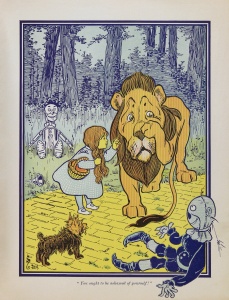
I’ve not run into the term “distributed mentorship” before, but I’ve used it time and again to learn new items. One-on-one mentorship isn’t available very often in life. You can wait around forever for your boss to notice you among the dozen or so other employees the middle manager is overseeing in between writing reports and attending meetings with the bigger bosses. Getting the special friendship that provides a yellow brick road to success is a combination of natural extrovert friendship and luck.

Neither of which most writers have in abundance. 

Reading Ms. Becks article on “What Fan Fiction Teaches The the Classroom Doesn’t“, I discovered the term “distributed mentorship”. And Fan Fiction is the perfect example. By putting your stuff out there in a friendly, open environment, you can get feedback (nearly all positive). When you reading for some real constructive criticism (concrit), you can ask for it and suddenly people who have been practicing for year break out their expert hats and can tell you things like – don’t be too nice to the characters and need more description – in between sending you hugs and happy thoughts.

Wizard of Oz, original artwork 1900. In public domain.

What do new writers need most? (1) Something to write about that they are interested in. (2) Not getting caught up in worldbuilding, but do actual writing instead. (3) Get lots of support. (4) Get little bits of where to improve at a time instead of the firehose an editor uses. (5) Receive suggestions with multiple ways to improve, in case the solution presented isn’t the one for them. (6) Write for an audience. (7) Read stuff in the genre they are writing.

In short, the fan fiction environment.

A distributed mentorship environment where someone will have time one-on-one with you for a few minutes. And maybe tomorrow, someone else will have a different suggestion. And a third person tells you, you have done the best THING E.V.E.R. with their favorite character and could you pretty please continue your story.

Hawk – Publicity Materials for Buck Rogers

I’ve never gone the fan fiction route. By the time fan fiction was on the internet, I had moved beyond that stage of my life. (Though before then in my daydreams/writing, I walked beside Dorthy in Oz, operated the communication panel on the Enterprise, and got my first kiss from Hawk on Buck Rogers.)

Even so, I have leveraged distributed mentorship for most of my life, especially in my writing. First, attending conventions – where panel discussions are another excellent example of this type of mentorship. From there, I discovered Gail Martin‘s Thrifty Writers’ Publishing for Success Network and was lucky enough to be in a position to join. Also while attending conventions, I’ve networked into several editing jobs with publishers which in turn exposed me to different ways publishers want things.

And don’t forget just talking to person after person about writing and editing, an exchange of mentorship with suggestions, supports, and concrits shared back-and-forth.

Distributed Mentorship. Use it and share it. In your writing life, in your clubs, and in your day job. 


Bibliography

Beck, Julie. “What Fan Fiction Teaches That the Classroom Doesn’t”. The Atlantic. 1 October 2019. https://www.theatlantic.com/education/archive/2019/10/how-fanfiction-improves-writing/599197/ (Last viewed 10/24/2019)

Writing Exercise: Priming the Pump

Image courtesy of the NaNoWriMo hive mind on the Internet

Sometimes, somedays, you just can’t get started. You and the blank screen pixels have become one. Maybe you are between works. Maybe you are coming off of editing. Maybe you don’t know where to go with the work in-progress (WIP). Maybe work was exhausting. Maybe you suffered a loss, an argument, you’re sick – mind or body or emotions just ain’t working yet.

And sometimes …. sometimes there is just nothing.

You may need to Prime the Pump. Just do a simple little exercise of 100 words. That is all you got to write. One hundred words. Maybe with 100 words you can write 100 more. Once the brain gets moving in one direction, it continues moving.

Collect a couple ideas and set them aside in a “Prime the Pump” list. You need to prepare in advance, because you likely won’t think of anything when you are in the middle of the ennui.

Examples for the list would be:

  1. 100 words of a character fault
  2. 100 words of a scene description
  3. 100 words of a motion like a kiss or a punch. Whatever is the next movement the character should be making.
  4. 100 words of why the character in the scene is fighting having the scene written. Dialog between me and him/her.
  5. 100 words of why I think I can’t write right now
  6. 100 words of what the kid did today
  7. 100 words why the spouse makes me happy
  8. 100 words of what I’m cooking for dinner and why I like the idea.

An Excel file should work just fine for the list. These are not meant to be an opus or even a sellable item. Just 100 words to kick start the day of writing. When you hit 100 words, switch out. Save the bit into the Prime the Pump folder with the day’s date and then go to the project you should be working on. Maybe have it already open, so you don’t even have to think about the switch. Just close out on the Prime the Pump file and go-go-go. The object is to get writing anything – so you can write something. 

For date formatting, I would recommend year-month-day format, that way the list appears in date order. Example:

2014 10 22 – Where I sit
2016 09 22 – Want to cry
2019 10 22 – The Kiss

By the way, if priming the pump doesn’t keep the words flowing after the switch out, give yourself permission to stop if you need to. You wrote something. Only 100 words, but if you are heartsick, or stressed, or whatever it is your brain is occupied with instead of writing, trying to write Product may not be happening today.

Give yourself permission because you tried. You actually put words on a screen. You tested to make sure it wasn’t just enough to start typing.

On the other hand, the attempt of Priming the Pump may keep you typing for hours – which is why you tested yourself. You never know which it is until you tried.

WRITING EXERCISE: Create a writing folder for Prime the Pump. Then create a PrimeThePump.xls (Excel) file. Record ten ideas. Write one of them and post it below.

***

My Attempt: Where I sit when I am typing

Despite the heavy gray curtains, the afternoon sun shines in my eyes and overheats my face, interfering with my ability to concentrate on the computer screen. Glancing left and right , blinking the spots out of my eyes, shelves of books and towers of CDs and DVDs beg me to waste time with them. Studiously ignoring them, I curl my toes against the smooth wooden floors and bang out another 100 words. (72 words)

Flash: Bragi

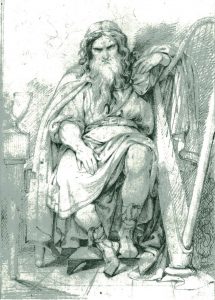
“Bragi” by Carl Wahlbom (1810-1858), Public Domain

There are those who claim the long-bearded one was just a ninth century midgard man named Bragi Boddason who traveled from hall to hall, plying gay tunes and romantic verse for an evenings meal. I say Nay, for I was blessed to hear the tales spun from the bardic god.

Twas only chance his and my paths crossed one night in a northern meadhall. He honored me with first tale after the king had waved us forward. And so I, with my merger skill, did share of news from my travels and twisted a tale about the Pennsic Wars.

Then he, Odinson and spawn of the giantess Gunnlod, did touch his hand to golden dwarven harp. Rune-shaped words fell from tattooed tongue and mesmerized with tale and song. Poetry is too mild a word for what I heard. Epic epeitath fell fire for armshiver. Warrior wept from sodden woesounds. Larksong and buoyant bells flashed forward for feastfamily festivity.

And I, not a sound could make.

My ears still rung with the runewords and yet my mind can not comprehend. Some mornings I wake hearing the harpstring, tears flowing for I will not hear it again.

Blessed are you who haven’t experienced this glory, and I fully pity you its lack.

But know you, the first thing you will hear in Valhalla’s hall after being let down by the Valkyrie maid will be Bragi’s harp for he is the Skald of Asgard. While he, for a time, did walk the earth in the guise of a midgard man, he is god born from a honeymead night.

(Words 265, first published 10/20/2019)

Geeking Science: The Aliens Among Us

Photo by Thanh Tran on Unsplash

Why do I love writing about children so much? Because they are the closest to alien thinking we adults experience. Concrete vs. Abstract thinking is such a big gulf.

I love the mene of working with children (babysitting, being a kindergarten teacher, being a parent) is like being an ambassador to beings from another planet and teaching them how to assimilate to our culture.

No, eating fire or dirt is not the best nutrition option on this planet. Sorry, your ambassadorship, but gravity works a bit different here – if you throw something, it will break. Your excellency, I don’t mean to imply anything, but what exactly were you thinking when you did this?

Part of it is everything really is new to them. They are still testing if gravity is consistent everywhere, why are some things good to eat and others not, and what is all this history that happened before they got here that they are expected to understand. Children really need diplomatic attaches to survive in the alien world they’ve been thrust into.

Terrell (in Honestly and Home Cooking Part 1) reacts differently to Mr. Troy’s disability, and very much needs all the adults in his life to keep him together and dressed. Scott (in It’s Dirty and Memory of a Lifetime) is slightly younger than Terrell and goes off the rails a lot more. I don’t think I will ever do a POV inside a child’s head simply because I cannot conceive what they are thinking. 

Things like – a child believes that by staying out of their bedroom, bedtime won’t happen. Because bedtime is associated with the bedroom. Or how my niece K (mentioned in my editing rant this month) didn’t want to write the character having problems because she really couldn’t dissociate herself from the character and she didn’t want to deal with the problems.

The cognitive difference between concrete and abstract thinking is fascinating. I love using fiction to explore it. And I sometimes let the difference in thinking bleed into exploring alien creatures, such as in Grass.

All of the amazement and exasperation in the differences between adults and children especially comes out in classic teen question “What were you thinking?” We expect the adult-sized children to understand cause-and-effect (which they do) and apply it to every situation, especially complicated ones (which they can’t) that we adults know from experience and shared stories is a beyond-dumb idea. They don’t have experience, their friends haven’t survived through the experience to tell the story, and they just don’t think that many steps ahead.

“Look mom, we did think it through. I made sure there was a mattress for when we fall.” “But mattresses have springs. You bounced!” “Mattresses have springs?”

These aliens live among us.

How about you? Are there aspects in children – from baby, through toddler, to teen – which make you geek? Do you have any stories to share?

Bibliography

“Cognitive Development in the Teen Years”. Stanford Children’s Health. Last viewed 10/2/2019. https://www.stanfordchildrens.org/en/topic/default?id=cognitive-development-90-P01594