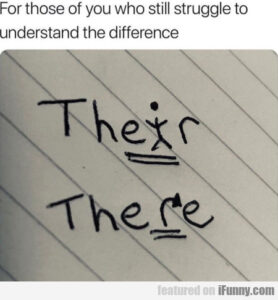
Image acquired from the Internet Hive Mind
(This suggestion does not help me, but it might help others. Learn as many techniques as you can if you are an editor, so you can meet your author where they are.)
Image acquired from the Internet Hive Mind
(This suggestion does not help me, but it might help others. Learn as many techniques as you can if you are an editor, so you can meet your author where they are.)

I don’t have the bandwidth today to do a deep dive into this. I had been thinking about saving Filtering for a writing exercise, but I’m just done at the moment. No brain left, so here goes words to rip out of the manuscript.
First draft (or zero draft, however you count), you will write a lot of “he saw”, “I felt”, “she heard,” letting a reader know what the point of view (POV) character witnessed. You might even see a lot of this in my fiction writing here on the blog, since I post mostly flashes – which means first draft stuff.
Anyway, during the second draft these need to come out.
Don’t put a barrier between the reader and what is happening.
“I heard the engine coming down the track, the long whistle blowing.”
Well, the reader knows if something is happening, the POV is witnessing it, less needs to be said about the process of witnessing.
“Clicky-clack, the engine is coming down the track. The long whistle blowing it’s mournful cry.”
With which sentence do you hear the engine and whistle more clearly?
Get rid of the filter words.
And don’t just take my word for it – here is a vlog from Alyssa Matesic (Cut these words now) – start at 1:10:
****
Okay, had a night’s sleep, now back to this editing rant. I’ve said a LOT about filtering words here on this blog over the years. Editing rants based on book reviews, slush reads, and so, so many edits, but part of this one was directed at me. Yes, all the editing and I still need to yell at myself about filtering words.
Recently, I wrote a four thousand plus word Flash to fill in a 2000-word flash hole in my 2024 line up called “Water Finds a Way” (9/29/2024). (I’ve been doing really good this year in cleaning up my backlog.)
The story was based on a dream I had that previous night. Very vivid – the water over the tiled pool room with a keystone design, the crawling up and down the missing stairs, seeing the approaching pirates through the magic window, the light house, the betrayal, the lightning flashing in the pool after I threw the clerical charm in there and seeing the silhouette of the monster in the waters. The challenge was to make that dream a reality on paper.
Problems with the story – time to developmentally edit myself:
(One) I chose to do it as first-person because that was how I dreamed it. Sometimes I dream in third person, but most of them are first person. Only the additions I did to make it into a full story instead of an action sequence from the middle of the story (there wasn’t a beginning or end, nothing to set it up and nothing to tie it up, I had been dropped into the story in media res), the backstory for the person operating the lighthouse, made them a less than interesting point-of-view from inside their head. They didn’t know where they had come from, nor did they have strong goals. And they didn’t have anyone to talk to so all the thinking was internal. Boring.
I need a different POV choice for the story. I think third person, where the lighthouse keeper talks to themselves could work, especially if I have one or two of the pirate crew be a second POV. Maybe the apprentice cleric; it would be interesting to compare two people caught up in situations where they are not allowed to leave. Situations which offer safety but at the cost of agency.
(Two) I just pounded out that 4,300 word story over a six-hour day with just one meal break. The ending got cut short by the need to sleep. Everything got tied up quickly, where the impact of the rope goal was just set up. The final two paragraphs would be better as two more pages.
(Three) With the quick write-up without a break, so many filter words were used. What I saw in the story needed to be written out – saw, felt, heard, believed, thought. The whole things need a rewrite to remove the filter words. I need to change description into immersion. Rip the barriers away!
(Four) The magic window, which was WAY COOL in the dream, does not work in the created story. It is a Darling and needs to be killed. Unless I can find a way to keep it. (My precious!)
(Five) I would like this to be a saleable length, so 10k. I had rushed things just to finish the blog in one day and fill a slot, but it is over 4k words already. That is some serious wordage. With a rewrite filling in the rushed descriptions, even with removing filter words, it should easily hit 6k and adding the second POV (Cleo) and a scene or two setting up stuff before the pirates arrived at the lighthouse – let’s see, them on boat where the pirate asks for payment as they race the storm to the mainland and another with them walking up from the pier (instead of the action just being watched from the window), and maybe a third of them loading onto the lifeboats should add another 2k easy. Fixing the ending would add at least another 1k, so doable at 9k without a problem. The final one thousand words can be adding a flash or two at the end, a couple good ones. Have to make it worth 99 cents.
***
Now the question is do I want to do this. Part of me wants to do a WRITING EXERCISE of fixing the filter words. The story can be so much better. But the publisher-selling part of me knows this isn’t in my normal wheelhouse and won’t sell well if at all and that is a lot of words and commitment for a mediocre product. Third part of me, the one part of a new writer’s group is going your goal was to outline a book for sale before the next meeting, this will do it. So here we are. What will happen tomorrow?
If I do rewrite it, I would put PART of the second draft into a Sunday post – equal to the Amazon first 10% rule. After which I would need to continue with the third and fourth draft cleanups for publication. It will be a whole week process. Hmm.

Photo by Marcel Eberle on Unsplash
Today I was poking my nose around and found a challenge: Write a drabble (100 words – no more, no less) and use a sentence from the last person’s drabble while doing so. The reused sentence is bolded.
“Time to make the omelets,” I said, entering the kitchen. “The restaurant doors are opened. The crowds are flooding in.”
My co-cook nodded. “Any special ingredients?”
“Oh, let’s try some galingale today.” Inspecting the workspace, I continued talking “And you have a dragon’s egg on your shelf. Get it out of the fridge. That should release all the hot people come here for.”
He looked abashed. “Actually, the egg rolled under the oven yesterday.”
“The oven?” My eyes snapped to the iron monster where we had banked the fires last night for a quick restart. “And you left it there?”
(words 100, first published 6/7/2026)

Photo by Patrick Tomasso on Unsplash
Last month I had an Editing Rant (Chapter Ending Questions 5/12/2026) and recommended an Other Cool Blog (Alyssa Matesic – Unputdownable 5/28/2026) on the topic of creating chapter endings which pull a reader through a story, making it Unputdownable (yes, still a word!).
Today’s writing exercise is to wordsmith a work-in-progress (WIP) chapter ending to pull the reader.
In grade school we are taught to end chapters with bows. The advice of “beginning, middle, and end” within a chapter, creating an arc, wasn’t defined, except for the end – you need to END a chapter.
But you don’t, not really. Only when the story ends, and even then leave threads for people to think on – for future series, for fan fic. But most importantly, for the Zeigarnick Effect. By leaving just a little unfinished, not completely closing the door, just making sure the core questions are answered for satisfaction, the reader continues to think about your story. This means they will recommend your story to others because they thought about it. They will remember you as a writer, because your satisfied them but also left them something more to think on. The story is both finished and unfinished. Not a cliffhanger, but what happened next; yes the MC and the romantic interest got together, but did they ever decide what color to paint the house. Silly little questions, but enough for the reader to keep filling in the story for a while.
The chapter-ending Zeigarnik effect, the raising of suspense to make the book unputdownable, shouldn’t be silly little questions. It should raise tension, making the reader go “just one more page.”
Remember Alyssa Matesic’s five ways to raise suspense at the end of your chapter (see her video for more details about each of these options – https://youtu.be/8ir5S0Nb_f4?si=MU0dVRr9o57uBdAt): (a) ask a question; (b) create an obstacle; (c) drop a bomb; (d) end with an unresolved emotion; (e) add a time constraint.
WRITING EXERCISE: Go over your present WIP and look at each chapter ending, the final paragraph. Do they do one of the five ways of raising suspense? Write which type of option you use (a-e or 1-5, however you have them written down). Are they all the same, or limited to just two of the options? Fix one of your chapter endings. In the comments, post the final three sentences you started with and what you restructured the ending to be (final three sentences, more or less).
My attempt: I tend to use the “end on a question” option the most. The ending of “Teamup Road Trip” which appeared in the A Funny Thing Happened on the Way to P-Con was as follows.
“So, number three?” Onyx asked.
Annie paused before answering, “Hopefully after the con.”
It ends the story, but as typical of the superhero genre, I left a “to be continued” at the end of the story. A what happens next which will make the reader want to run out and get the next comic book or, in this case, the next anthology (due out around the September 2026 convention!).
I used both the “ask a question” but also a “unresolved emotion” technique, with a little bit of a “time constraint” tossed in. Things happen in threes in this universe, but the third thing hasn’t happened yet. The call-to-action sword is hanging over the superheroes when all they want to do is take the weekend off and attend the con. We know, as readers who love the genre, that the third thing isn’t going to wait until after the con. Something is going to happen at the Dallas P-Con convention.
Is it a cliffhanger? No, because the story was “What happened on the way to P-Con.” They dealt with an emergent, a medical emergency, and picking up the guest-of-honor for the convention from the airport as a disaster-movie level blizzard hits. But at the end, they had arrived! The story is tied up.
Now let’s look at the chapter endings themselves. I can’t change them at this point, the story is published, but it should be an interesting visit.
Chapter 1: Manuel stepped back as Annie started the engine, giving them a little wave as they backed out of the drive and headed into Austin late morning traffic to get on I-35.
No tension here. This is ending the establishment of “normal” and starting the trip. It is early in the story and the first chapter was about getting to know the characters and liking them. The reader isn’t likely to put down the book at the end of chapter 1. The question is “what is about to happen?” I guess it is enough to say option (a), maybe.
Chapter 2: “Maybe she is hiding it, maybe she is—” As they watched the drama of the last car, the fists the angry driver had been shaking at the agents suddenly formed crackling white plasma around them.
Chapter 2 definitely ends with (c) Drop a Bomb.
Chapter 3: As it was, the blast was contained. Only those within the globe faced the consequences of the explosion.
Returning to my favorite ending-type for chapters, (a) Question: What happened to our MC who was in the center of that globe!!!!
Chapter 4: “No, she isn’t in a coma, but her entire system is out of whack enough there is a danger if I don’t get her to a specialist…
This time a (e) time constraint has been added to the story. Up until now, our heroes have all day to meander to the convention and Orb and Angel are arriving the night before, so even more time. Now, “there is a danger if I don’t get her to a specialist” soon. This ticking clock will increase throughout the next chapter.
Chapter 5: “Hold your horses. It ain’t like nobody’s dying on you.” — “That’s debatable.”
The (e) time constraint is coming due, mixing with the (a) question of “will Orb survive?”. This is the strongest pull through, except I didn’t end on that note. The chapter actually concluded with : The door started rolling up. Angel moved her compact car forward as soon as it fit under the metal. Once she was inside, the door rolled down behind the vehicle.
This ending leaves the scene unresolved. But it could be considered a clear cut scene ending. The character “walked through a door.”
Not the best choice. But I also wanted to create a feeling of claustrophobia in the next POV character. She was enclosed in a situation she didn’t understand. The door closing was important for her emotions. Not everything is driven by chapter endings; techniques are used for storytelling, they are only tools to shape plot and characters into a narrative. Not every tool is needed for every situation.
The superhero story continues with another three chapters. (It was 20,000 words.) Once I get the rights back to both Teamup Road Trip and its sequel, I hope to publish both in one volume with a side story about Vicky and maybe what happened with the ancient ghost dire bear. Stay tuned!
Oh, and don’t forget to do this writing exercise yourself.

Amazon Cover
A Funny Thing Happened on the Way to P-Con! (Anthology)
BOOK BLURB ON AMAZON
A funny thing happened on the way to P-Con: What do you get when science fiction and fantasy collide with convention chaos? A collection as unpredictable—and as fun—as the P-Con convention itself. The stories in this anthology support the operation of the P-Con Science Fiction & Fantasy annual convention. Purchases of this Kindle or Paperback go directly to the operating fund.
Inside these pages you’ll find:
And yes … talking squirrels. Whether you’re a longtime fan or a newcomer to the weird, wonderful spirit of P-Con, or science fiction and fantasy, these stories will make you laugh, cheer, and maybe wonder what’s really lurking behind the dealer’s table. Come for the convention. Stay for the chaos. And enjoy the ride along the way!
MY REVIEW
Full Disclosure – I wrote one of the stories in this anthology, so I might go a little nice, especially since I am at the con right now with all the people who wrote this charity anthology. But, well, I still loved it a lot. A fun theme, driving to the con, and handled differently by everyone. I loved the storms everyone hit; is it the same storm? (BTW – the storms were not listed as part of the theme, but if you have ever driven any time in the Texas, … yeah … storms out of nowhere.)
The best two stories are absurdist and farcical, but I think they best captured the lore and joy that is P-Con: #3 Waffle Master and #4 Tanks for the Pies. Now onward to short-one(ish) sentence reviews of the nine short stories, well seven short stories (10-20 pages) and two novelettes of over 50 pages each.
1. What a Way to GOH by Robert E. Hampson – Portal fantasy. I think it ran a little long, but villains are going to monolog. Exploration of tropes. Not my favorite story of the lot but I understand the reasons it is first. (One of the two long stories.)
2. Fear and Loathing on the Way to P-Con by Greg Radabaugh – Satire super spy alien abduction thriller.
3. Prophecy of the Waffle Master by Wally Waltner – Absurdist Urban Fantasy capturing a P-Con tradition in a single golden syrup moment. Best of the stories.
4, Tanks for the Pies by Lizz Yarbrough – First day of con fever fantasy crossed with friend shenanigans. Squirrels, pies, Lizz, and a tank – the world is not safe. Second best (and very close to the best) story.
5. The Story She Left Behind by Sandra L. Medlock – Ghost story wish-fulfillment of quiet voices getting their stories told.
6. The Scenic Route to Nuts by C.V. Walter – Light anime-touched science-fiction. Always help the strays.
7. Aliens among Us by Jesse M. Slater – Science Fiction about being out of place, sometimes the world is hostile, and sometimes you are exactly where you should be with those you love at your side.
8. A Funny Thing Happened on the Way to P-Con or did it? by Stephen Patrick and David Rike – A comedic interlude of fools; a farce in the manner of A Funny Thing Happened on the Way to the Forum. Not to my taste.
9. Teamup Road Trip by Erin Penn – Well, this one is mine. Superheroes driving from point A to point B, with some unexpected stops. I love the blurb the editor created for it “Superheroes braving the most dangerous gauntlet of all: Interstate 35.” (Second of the two long stories.)